Prolepsis…Goodness is already here!

There is something to be said for living out the cosmic promise of the God of History as if it has already come into its fruition. That is the essence of prolepsis. In theology, it refers to instances where biblical texts or Christian teachings describe future realities—such as the final resurrection, the full establishment of God’s kingdom, or the ultimate victory over sin and death—as though they are already accomplished in time and space.

The alternative is to wallow in the darkness of the moment, which necessarily leads to hopelessness. Drawing upon their Jewish history, Christians live as if the Kingdom of God has come to dwell among us, while recognizing the reality that we exist in the paradox of the “now and not yet.” Prolepsis does not deny the imperfection of the present by regarding it as illusory or as somehow morally inert. On the contrary, proleptic anticipation acknowledges the current darkness—where appropriate—while simultaneously affirming the ultimate victory of freedom over empire, healing over brokenness, abundance over greed, and finally, life over death. As Barbara Brown Taylor has famously said, it is the task of the commissioned church, and those of us who preach, to “raise the dead, some of whom are unwilling!” I know the feeling.

Have I lost you yet? Please bear with me!

Image by Zac Durant on Unsplash

This is Advent in the Christian tradition, the weeks before Christmas. The liturgical season has morphed over the centuries from a Second-Coming orientation to the anticipation of the First Coming of the Christ, Still, the readings prescribed for the season come from apocalyptic literature. That sort of imagery, with its end times emphasis, is often confusing and even frightening. Far too many folks are fixated on that. Even Jesus reminds his followers in Mark 13, the so-called “Little Apocalypse,” that the day and the hour are known only to “the Father.” I have always maintained that such speculation is of minor significance in the collective consciousness of the faithful community. It is all up to God, so we ought not to sweat it!

Advent contrasts the present darkness with the coming light, and true to form, Advent arrives at the darkest time of the year. We are reminded that the present will soon be the past and that the future is in God’s hands.

The people of God—who might be Jews. Christians, or Muslims—march to the beat of a different drummer when it comes to assessing present circumstances. The question is rightly asked as to why—if God’s transformative promises are true—hasn’t anything changed for the better. The short answer is that they have!

Christians understand that the history of biblical Israel is also their history, after a fashion. My Jewish colleagues know of my high regard for the ancient prophetic tradition, which I would argue is the same worldview out of which Jesus spoke and taught. Prophecy is often misunderstood as merely foretelling future events—soothsaying, if you will. But authentic prophecy involves insightful and creative commentary on the present. Some of that might involve conjecture as to what is likely to happen if the people do not repent. The faithful prophet—who might even be a certain short chubby preacher I know—is the one who speaks for the High and Holy One—even when the vocation involves wandering the streets naked, according to Isaiah 20! Let’s hope it never comes to that!

The prophet’s words are sometimes strident, and his (or her!) imagery is often dark and foreboding. The point is that genuine prophecy establishes and disseminates a different narrative vis-a-vis the one we have been used to hearing. The prophet affirms the sovereignty of God and continually announces the dawn of a new era in human history. The image of “rivers in the desert” is both encouraging and striking in the way in which it imposes redemptive transformation upon an inhospitable environment. If God is in fact “doing a new thing,” perhaps we ought to pay attention!

I am about to do a new thing;
now it springs forth; do you not perceive it?
I will make a way in the wilderness
and rivers in the desert (Isaiah 43:19, NRSVUE).

The prophetic traditions calls us to view Creation as being redeemed by God constantly, and humans are to be seen as partners with the Deity in the continuing task. It is a matter of living into the goodness that is already upon us—despite appearances to the contrary.

I am keenly aware of those who suggest that we ought to deconstruct all we have been taught about the Bible and about the tenets of Christianity. I am on-board with that to the extent one does not conclude that the very notion of God is erroneous. There is a great deal of misunderstanding about spiritual things that many of us have carried with us for years. But I am unwilling to dump the concept of God, favoring instead a reimagination of Deity in a non-theistic fashion. Thomas Merton said something similar:

“There is ‘no such thing’ as God because God is neither a ‘what’ nor a ‘thing’ but a pure ‘Who.’ He is the ‘Thou’ before whom our inmost ‘I’ springs into awareness. He is the I Am before whom with our own most personal and inalienable voice we echo ‘I am.’

―Thomas Merton, New Seeds of Contemplation

Unfortunately, our concept of God has deteriorated into a heavenly Santa Claus who receives our various petitions, granting some and denying others, in what might seem like a capricious fashion. The problem, I think, lies in a misconception about prayer. In fact, God always hears our prayers, but bad things still happen to good people. Much of life is a matter of learning that “it is what it is!”

The temptation to conclude that life is pointless is also great, but that would deny the conviction of the people of God that history is leading somewhere—the telos (Greek). Apocalyptic thought teaches us that enduring truths are often hidden from us—but that we may come to these truths as the layers of obfuscation are peeled back, revealing all that which is of “ultimate concern,” in the words of the great Paul Tillich.

Prolepsis bids us to embrace the present moment in all of its tension, but with the conviction that God has inserted Godself into human history—first in the Abrahamic covenant—and continuing into the incarnation event of Christianity. It is a matter of living as if the divine promises have already been fulfilled—because they have!
Leave a comment

Filed under Uncategorized

Apocalypse Now

A thoughtful friend has suggested that the past few years have revealed some profound truths about who we are as a people. She cites some of the disturbing revelations emanating from #BlackLivesMatter and #MeToo as a kind of apocalypse if we understand what the term implies, i.e. a kind of “peeling back” of the layers of obfuscation that have heretofore obscured the Truth. For most Americans, the truth is hard to accept, I fear.

I have long believed that we find facing the facts just too painful, and so we soothe ourselves with notions of American exceptionalism and sometimes even a revisionist history that refuses to make moral judgments about our collective past. Hey, I get it; nobody wants to embrace the ugliness of slavery and the shame of wealth inequality, to cite just two realities. That’s not who we are, we exclaim! Well, it’s certainly not who we want to be—who we claim to be! It just doesn’t sit right with us to peel back the layers to try and get at the substance.

It is far easier and more palatable to our bruised American sensibilities to demonize the AOCs of the world even as we hold fast to a system we know does not work. And we now know—every one of us—that what we have does not work. The apocalypse has come, and there is no denying it. The question remains as to what this new revelation will inspire us to do about it. Perhaps we do nothing and go on with business as usual.

This pandemic will end someday. Will that day find us clinging stubbornly to a battered and inequitable health care system? Will we continue to ignore the vast food insecurity that plagues this nation? Will we still turn our backs on those who struggle to pay their bills and who suffer under the weight of exorbitant prescription drug prices? Will we turn a blind eye to government corruption and the unholy efforts to deny access to the ballot box? Will we continue to consume the pablum of the Right because we just can’t stomach anything that looks like the dreaded socialism that we fear so deeply?

Because there is a better way for America. We now know that the old way is not it. This apocalypse has taught us valuable lessons. Will we allow our “leaders” to mislead us into a spiral of injustice and existential death? I pray we will muster the moral courage to rise up and do what is right.

I might have a decade and a half of life left. I just hope…


Leave a comment

Filed under Uncategorized

No Shortcuts

The thing about Holy Week is that it hits us in the face with the human condition. It’s raw and it’s real. It begins with a parade and ends on the town garbage heap. I’m not being irreverent—just genuine.

Holy Week is facetiously (and privately) dubbed “Hell Week” by clergy who easily become worn out by the demands of additional services during its span. Maundy Thursday, Good Friday, Easter Vigil—they all run right into Easter Sunday. They are a drain on one’s creativity and stamina. And Heaven forbid that any of us should have a death or other crisis in the congregation between Palm Sunday and Easter; most of us have been there a time or two.

This year is uniquely challenging because we can’t be together with those we serve. The waving of the palms, the voice of children and adults singing the familiar hymns, the beloved Easter breakfast, the Easter egg hunts will not please our senses this year. Our spirits, which are typically piqued at the singing of “Jesus Christ Is Risen Today” in a packed sanctuary, will have to retreat inward for now.

A few weeks ago, when President Trump first suggested that social distancing might come to an end on Easter Sunday, many of us were aghast at the suggestion. It does not matter if one is “pro-Trump” or not (though it seems to matter a great deal to him!), the spread of the virus seems unlikely to be sufficiently controlled to allow the churches to be full, as Mr. Trump wistfully imagined. He trotted out the notion again in his April 4, 2020 daily presser,

Andy Borowitz, the humorist for the New Yorker, imagined a scenario in which Dr. Anthony Fauci convinces an unsuspecting Trump that his hope is misplaced because “there is no Easter this year.” When the president questions Fauci, the good doctor tells him that “this is a leap year.” I laughed when Borowitz has Trump say, “Well, I don’t know. I don’t go to church.” I doubt many Trump supporters saw the humor in Borowitz’s satire.

The experience of those first disciples on that first Easter Sunday was a far cry from what we now do on the Day of Resurrection. In this year, however, there is some commonality. They were scared, and so are we. They were uncertain about the future, and so are we. They were in hiding, and in a manner of speaking, so are we. But before we even get to Easter, we must pass through Holy Week. There are no shortcuts in life.

In his book, Lincoln’s Melancholy: How Depression Challenged a President and Fueled His Greatness, Joshua Wolf Shenk, explores how the melancholy nature of Abraham Lincoln’s personality was likely more akin to clinical depression. Clearly, Lincoln was depressed, Shenk says. While most of us bravely try to put the best face on adversity, depressed people see things as bad as they really are. Lincoln was able to accomplish the great feat of keeping the union together not despite his depression, but because of it!

The events of Holy Week—especially from Thursday on—help us to see things as bad as they really are. For Christians, we do not stop there because we know how the story turns out. But for now, it is what it is. There are no shortcuts in life.

Leave a comment

Filed under Uncategorized

We Need Each Other

Second Sunday in Lent
Genesis 17:1-7, 15-16; Mark 8:31-38

The Detroit faith community in which I came of age always received a special offering on Palm Sunday. As a Lenten discipline, folks were asked to take home a Lenten self-denial coin folder with slots into which one would insert a quarter each day of the week. At the end of Lent, the folders were collected for the One Great Hour of Sharing appeal.
Even as a very young man, the amount of money set aside each day never seemed especially burdensome, but there was something about the exercise that I liked. Perhaps it was the familiarity of it year after year that I came to appreciate. And it was a community exercise, which that made it even more special.
I recall the sheer weight of a full folder, and there was something about the sight of all those quarters representing some level of daily sacrifice. It seemed as though I had accomplished something good as I beheld all of those quarters lined up and firmly fixed in their slots. I’m not certain I completely understood the concept of self-denial, but it felt important that we all should participate. It was always a satisfying moment when I was able to enter the narthex and deposit my folder in the receptacle designed for that purpose.
As I think about my own faith development, it seems that my most profound spiritual experiences have come in the context of the faith community. Even now, the strains of an old familiar hymn often evoke a deep memory that I cannot easily describe, but which causes to well up within me a profound sense of affirmation. It’s like the emotion one might experience when returning home after a long absence.
Like all of us, I am the sum of all the nurture I with which I have been graced from the beginning of my Christian journey. We need the love, the affirmation, the discipline—and sometimes even the reproof—of our Christian community to be faithful disciples.
Like Abraham and Sarah, who are called at a very advanced age to get up and move to another place, maybe we risk not living with a sense of God’s presence when we opt for the safer course of action by staying where we are, where everything is safe and predictable. What if the genuineness of our vocation is discoverable only when we deny ourselves by relinquishing our self-maintained security in favor of our call to live in relationship with God and each other? I’ll connect the dots in a moment.
Abraham and Sarah could have remained there—just the two of them—or they could have (and did) rely on the divine promise that there would be many more human relationships that just might help them see God. It’s all about living in blessed community. We are better together.

Truth be told, most of us don’t do self-denial very well. It goes against our own sense of worth and may leave us wondering if there is any genuine value in it. And yet, Jesus himself makes it plain:
He called the crowd with his disciples, and said to them, “If any want to become my followers, let them deny themselves and take up their cross and follow me…”
On the surface, Jesus admonishes his disciples to give up their unique identities, but I wonder if that is what he means. Perhaps, as Prof. Karoline Lewis of Luther Seminary suggests, there is a slightly different interpretation. What if the denial of which Jesus speaks is less about self-deprivation and more about our making an intentional choice to be in community, thereby discovering the essence of who we are?
Perhaps our true identity becomes apparent—and spiritually operative—when we live as an organic whole. That does not mean that we cease to be who we are as individuals, but it does suggest that we need each other and that we are better together.
In the 1830s, about a generation and a half before this congregation was founded, the French diplomat Alexis de Tocqueville visits the comparatively new country of America and is impressed with the propensity of Americans to be “joiners.” The local Grange was a center of communal life, and churches enjoyed a heyday of membership. Just a century and a half later, the contributors to the 1984 book Habits of the Heart conclude that the prevailing ethos of rugged individualism—which was always present—had become that reality which militates against the very sense of community that once made America strong.
One could argue that the 1980s decade in America was the beginning of our tacit acceptance of a mindset of “I’ve-got-mine-let-them-get-theirs.” It’s hard to argue with the many public policies enacted in the 80’s and 90s that seem to demonize the poor and legitimizes the status quo.
Abraham and Sarah would have known nothing of Trinitarian theology, and yet, their obedient response to God’s bidding was born of the same spiritual considerations. As I understand it, the relationship between the three separate persons of the Godhead is a mandate for humans to live in a similar indivisible relationship. What would have happened had they not obeyed? No divine relationship, no community, no blessing. Just an aging couple all on their own.
We need each other.
Jesus also connects the necessity of denying ourselves with the mandate to take up our respective crosses. What do you think he means by that? How often have you heard someone say, in commenting on some personal burden, (perhaps you have said it yourself!) “I guess it’s just my cross to bear?” That’s not a cross…it’s an unfortunate burden! No, when Jesus speaks of a cross, he is talking about that which we intentionally take up for the sake of the Kingdom of God!
Lent is all about the sort of reflection that moves us to that place—that self-discovery—where we may begin to understand our unique role in repairing Creation—in building the Kingdom right here and right now. Taking up our cross is part and parcel of that mandate to claim our vocation. That all seems to work best in the context of a community where each of our unique gifts are discovered, affirmed, and celebrated.
The call to deny ourselves does not mean that we give up our individual identities, but rather that those identities become part of the blessed whole. We become the sum of God’s redemptive motivation as we look toward the coming of the Kingdom in its completed glory. Until then, we exhibit to the world what the Kingdom looks like. We need each other for the tapestry to be complete!
May this holy season find us in discernment as to how we each might become part of God’s divine solution to the otherwise fractured world in which we live. We need each other.

community


Leave a comment

Filed under Uncategorized

Our Human Problem

In Spielberg’s monumental film, Schindler’s List, there is a scene where Amon Goeth, the brutal Nazi commander of Krakow, is having a one-sided conversation with Helen, his Jewish housekeeper. Goeth comments on the way Helen’s eyes make her appear “almost human”, and then—clearly disgusted by his obvious desire for her—Goeth violently lashes out at her.

That scene has become all too familiar down through the ages, as oppressors have momentarily disregarded their indoctrination, and like Goeth, they have been repulsed by it. I suggest that the inability to see the existential “other” as authentically human is at the heart of our post-post-modern angst. It is a spiritual problem, and it is as old as human history.

Dr. Bruce Rigdon was my church history mentor in seminary. In his lecture on the theology of Anselm of Canterbury, Rigdon would remind students that Anslem regarded the disobedience in the Garden of Eden, as the moment when the luminosity of Creation was rendered opaque by the hubris of Adam and Eve. I have always liked that imagery because it suggests the human capacity to blur the innate image of God that dwells in all creatures, and perhaps even the tendency to darken it.

And so, it seems to me that the killing of Trayvon Martin, the violence of UC-Santa Barbara shooter, Elliot Rodger, and the rants of Donald Sterling, all fall into the same spiritual category: when the other is less than human, it’s acceptable to mistreat—or destroy them. That was the mentality of America’s slave past, which operated on its own twisted morality based on race. One could also cite the misogyny that gave rise to witch hunts in Europe as being cut from the same cloth. And in our present day, the socially accepted objectification of women is no less reprehensible.

God forgive us when we so easily regard another human being as an avatar for own amusement or the object of our abuse. For every human—male or female, black or white—bears the image of God within them.Image

Leave a comment

Filed under Uncategorized

The Grandest of Delusions

  As much as we hate to admit it, the specter of racism yet hangs over America, and the verdict in the George Zimmerman case is evidence of that ugly reality. The fact that many of the same white Americans who were offended at the casual ease with which Paula Deen used the n-word are now applauding the exoneration of a white man who shot a 17-year-old black kid suggests a presumption that black life is less valuable than white.

To be fair, we ought to proceed with caution when criticizing a jury verdict, especially when we did not hear the evidence. But some of what is now being brought to light about Zimmerman’s behavior on that fateful night should concern all of us. One wonders why the prosecutors did not raise the issue of Zimmerman’s reference to Trayvon Martin as “a f—ing coon” in his 9-11 call, while his defense attorneys insisted that Zimmerman had no racial insensitivity. Seriously?

We have known for years that sentences of black defendants are routinely harsher than for whites accused of the same offense. The media loves to jump on stories of missing white kids (blonde girls especially), while virtually ignoring the dozens of black children who go missing each year.

If Trayvon Martin had shot George Zimmerman and the same defense had been put forth, the outcome would have been altogether different.

And we still believe there is no more racism in America?Image

Leave a comment

Filed under Uncategorized

If Life Imitated Art

How marvelous it would be if life were to more closely imitate art. How blissfully sweet our existence if love were to live up its reputation in song and cinema! But most of us have learned that the blessed intersection of eros and agape involves a maturation process none of us could have imagined in our star struck years.

Time and experience are our mentors, to be sure. Having been married now forty years, my dear wife and I have settled into a comfortable relationship, the essence of which we could not have fathomed in our twenties. We have endured much together, and quite naturally, we have come to rely on one another. The depth of our mutual devotion is rooted in the confidence of our love for each other, giving rise to a quiet and reassuring predictability of our life together. Not at all a bad thing, I submit.

Perhaps to her credit, my companion of four decades has consented to indulge me in my sometimes quixotic notions more times than I can count, and I am grateful for it. Clearly, her devotion has not been without peril to herself. If I am honest, I have to confess that I still display a kind of naiveté when it comes to accurately assessing the likely pitfalls of certain enterprises, not the least of which has been my career path: I am a second-career clergyperson.  

As a child, I remember my grandmother softly singing as she stood at the kitchen sink:

Oh, come to the church in the wildwood
Come to the church in the dale
No place is so dear to my childhood
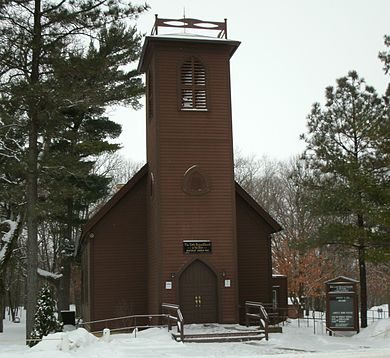
As the little brown church in the vale.

I never knew such a church, except for my grandmother’s singing. Certainly, I have never served such a congregation. But I daresay I have longed for that idyllic vision on some level, a sacred place where the grace of God shines through and is abundantly evident in the affirming personal relationships I can only imagine. Remember what I said about my naiveté!  

The present moment is very challenging for me, taking its toll on both soul and psyche. My wife, who has had monumental challenges of her own of late, is hugely affected. She weathers the storm better than I do sometimes, but I regret having exposed her to the trauma.

Life is messy, to be sure, and faithfully following one’s vocation is not without discomfort. But I know that nothing stays the same and that God will act, as God always does. It’s just a matter of when. If only life were a bit more like art.  Image

1 Comment

Filed under Uncategorized

Christmas…Again

There is something reassuring about the passage of time. Perhaps the operation of the cycle is the one constant we can count on in a changing universe. Humans have been marking time for millennia, giving names to periods of time (days and months) as a way of organizing human activity, synchronizing it with the movements of either the moon or the sun.

Christmas demonstrably marks the passage of time for many of us. It comes again and again for Christian adherents and for those who are indifferent to its religious significance. The nativity story in Luke’s Gospel chronicles an event more likely to have occurred in the spring time. However, the designation of December 25 as the date of Jesus’ birth was a matter of ecclesiastical expedience. The date was fixed, probably some time in the fourth century of the Common Era in order to correspond with the winter solstice, and perhaps to co-opt some of the revelry attached to the Roman feast of Saturnalia.

Even now, the certainty of the arrival of Christmas each December 25 creates a recognizable benchmark for all sorts of phenomena in individual lives as well as in world events. One confidently declares that “the troops will be home by Christmas,” or “I’ll get that promotion by Christmas.” Campaigning for Barry Goldwater in 1964, Ronald Reagan advocated declaring war on North Vietnam, asserting that “we could pave the whole country and put parking stripes on it, and still be home by Christmas.”

Time marches on, and the arrival of Christmas is a universally recognized square on the calendar. Perhaps, though, it is something more than that.

Over the years, the American observance of Christmas has taken on a number of attributes—much of it revolving around Santa Claus and gift-giving. But despite its commercialization, the very notion of Christmas retains a certain genuineness of spirit and an implicit belief in the human family that actually transcends religion and culture.

The skeptic may well regard the historical development of Christmas in its religious context as evidence of a self-serving church hierarchy intent on replacing the older mythologies with the newer Christianity, and that would be accurate in some ways. However, the gradual assimilation of ancient Celtic Yuletide practices into Christian rituals, for example, may well have been less intentional than some would assert. The interplay of cultures always involves some synchronicity, and ancient wisdom has a way of resisting its own annihilation.

For at least a third of the world’s population, Christmas is more than just a date on the calendar. Christian adherents now live in diverse regions of the planet, such that there is no longer one identifiable center of global Christianity. Collectively, there are many more Muslims, Jews, Hindus, Jains, Buddhists, Bahá’ís, and Sikhs living on the earth, a reality that seems to elude many westerners, religious or not. To the extent that all religions embody wisdom and truth, the Christian experience stands as one among many, but it is an authentic experience nonetheless.

While many Old Testament scholars doubt the existence of certain “historical” figures, like Abraham, Moses, or Jacob, the essential “truth” of the on-going saga of God’s people cannot be denied. Similarly, while Christmas ostensibly commemorates the nativity of Jesus, the ontological truth it conveys surprisingly is not limited to the Christian tradition. Although it does not a represent a genuinely historical event, it teaches all of us something about the goodness of God and God’s “peace toward those whom he favors” (NRSV).

The celebration of Christmas in America—and I suspect in most other contexts—is as much about cultural traditions as it is about religious customs. To the extent that neither wisdom nor enduring truth are limited by religion or culture—and recognizing that the theological message of Christmas is one of Immanuel (“God with us”), we would be hard-pressed to deny the presence of the transcendent God in any facet of human existence—even in those which are not expressly Christian!

The Judeo-Christian tradition has long held onto the notion of God’s active and intimate involvement in human history. In classical Christian thought, Christmas recalls the moment of divine Incarnation—not as a one-dimensional historical event, but as something that cannot be contained in time or space—nor constrained by religious dogma or cultural considerations. Some of us think that’s worth waiting for and celebrating—year after year after year.


1 Comment

Filed under Uncategorized

For the record…

The presidential election campaign that has just come to a close was the most emotionally and spiritually painful to me ever, such that I strongly suspect some of my friends and family relationships will bear the scars for many years. The level of rancor in the give-and-take between those closest to me—and often their reactions to me—roughly equaled the harsh public rhetoric that seems to have wounded the very heart of the American democratic process. I tend to dislike wounds to my psyche, so I will have to think long and hard about how or when I will ever again make political pronouncements in any sort of public forum.

But, just for the record, I want to make it clear that I approach civic life from a considered Christian perspective, and my politics reflect my faith in a Judeo-Christian ethic which presumes God’s preferential option for the poor. That is the core message of my preaching, and I am disappointed in those who would cast my convictions as some sort of affirmation of a massive welfare state that seeks only to give to those who do not deserve and only works to enlarge itself in the process.

It seems only fair that I be given the benefit of the doubt—as I have given that benefit to others—and I am genuinely nonplussed by the frequent suggestion that I am ignorant or uninformed. I am a lot of things, but ignorant is not one of them. Those on the right of the political spectrum are often mean-spirited, or so it seems in my experience. Perhaps I should refrain from offering my opinion if I expect any sort of respect for my opinions.

The discourse in this recent campaign has been anything but civil, and I must say that I continue to be alarmed by the visceral reaction to President Obama and his supporters. And while we are on the record, I note that there has been very little gloating from the victorious political left, but a great deal of outrage from the right. The suggestions that states should secede from the Union is preposterous on its face.

So, I will probably limit what I say and how I say it in order to protect my delicate ego. I am one of those starry-eyed Jesus freaks who just isn’t sophisticated enough to hold his own against the emphatic declarations of Fox News, and God knows I don’t shout loudly enough to be heard above the din.

To my friends and family, let me say that I regret having tried to engage you in a fruitful political discussion. You already know that we lefties just “want stuff.” I’ll just go back to sitting at the feet of Jesus and trying hard to understand what he is saying.

.
.

Leave a comment

Filed under Uncategorized

Seeking the Welfare of the City

According to the U.S. Census Bureau, 80.7 percent of Americans lived in urban areas as of the 2010 census. That’s actually up from 79 percent in 2000. A relevant question might be just what constitutes “urban.” For example. I serve a congregation that is technically suburban by virtue of its geographic location, but its two-mile distance from Detroit (making it an inner ring suburb) causes us to experience many of the same issues as the central city. Any way you cut it, our community is very much a part of the urban reality; we are, for all intents and purposes, an urban congregation that happens to be located in the suburbs.

Early in his term, President Obama established the Office of Urban Affairs, expanding upon an articulated urban policy in the Clinton years. Anybody over 50 remembers the committed urban agenda as part of Lyndon Johnson’s Great Society initiative. Republicans have never said much about urban policy, which makes me wonder how this current presidential campaign could possibly be as close as some say it is. That’s another story, however.

When it comes to support for public education, neither President Obama nor Gov. Romney are on the right path in my humble opinion. Obama seems to back public charter schools while Romney is in favor of subsidies for parents to send their kids to privately operated schools. Both approaches ignore the root of the urban plight: concentrated poverty. Moving poor kids from their indigenous inner city neighborhoods does nothing to address that issue.

The prophet Jeremiah had some things to say about prospering where God has put God’s people. In the aftermath of the Babylonian siege, Yahweh speaks through the prophet and declares: “Seek the welfare of the city where I have sent you [into exile], and pray to the LORD on its behalf; for in its welfare you will have welfare” (Jeremiah 29:7, NASB).

I do not mean to suggest that we should view our cities as places of exile, but I do know something of the concentration of poverty (leading to concentrated crime) in such places. And unless we begin to embrace the entirety of our urban communities–city and suburb–entire states,and indeed our whole nation, suffers. A real commitment to the health of public schools and good public transit goes a long way toward encouraging the sort of community consciousnesses that is so lacing in America today.

Fact is that neither party is talking about poverty in this campaign. It seems to me that is where we need to begin a serious discussion.

Leave a comment

Filed under Uncategorized