
The transformative power of the Nativity
Christmas is a time when the whole world stops to bear witness.
In the Christian tradition, we are still in the season of Christmas. It is only now that “the work of Christmas” has begun, and it is relentless. Our attention is first drawn to the singing of angels. If one listens closely, we can still hear their voices above the faint cries of a homeless baby in a manger.
Howard Thurman was an African-American theologian and preacher who was a mentor to many in the early American civil rights movement.
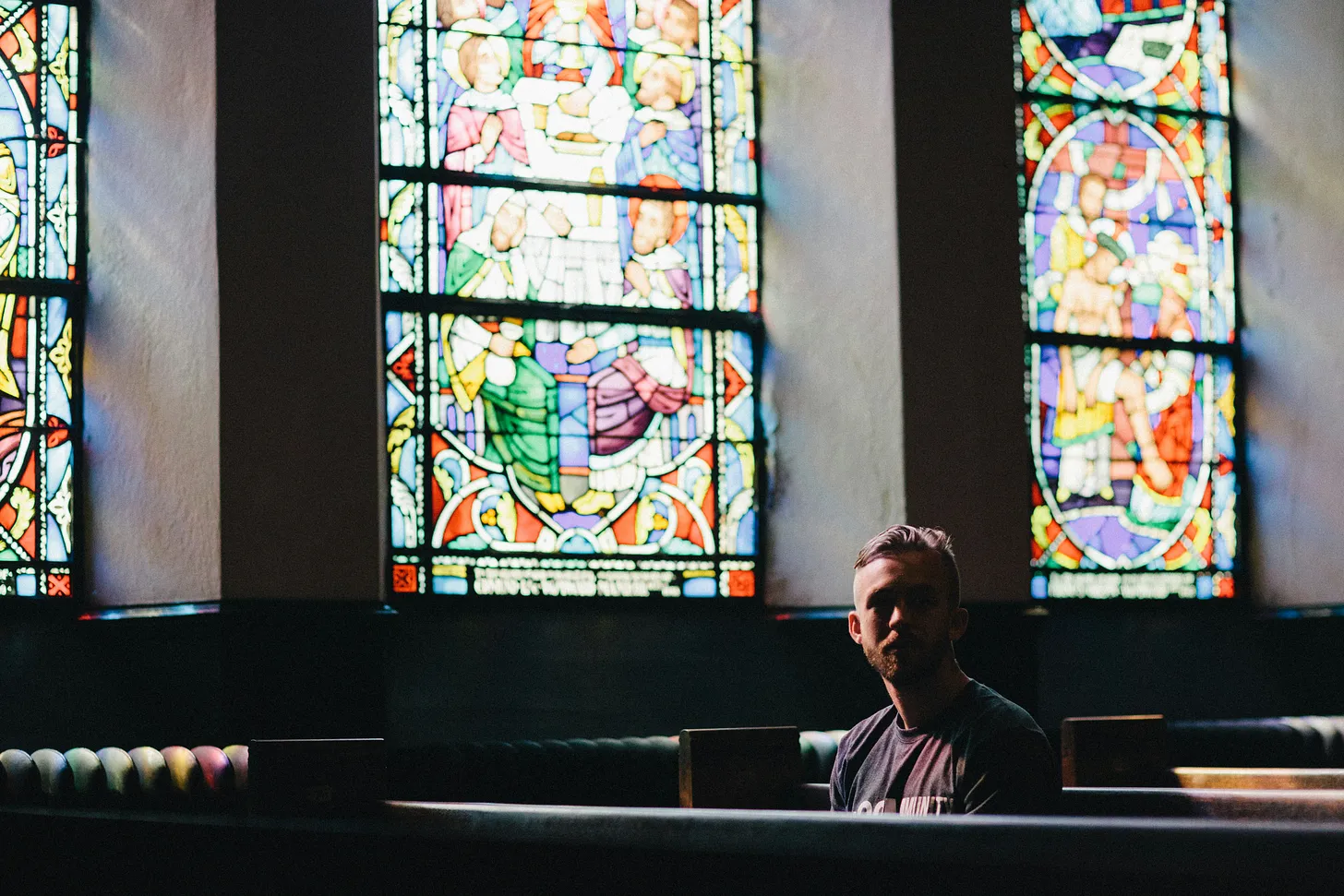
Photo by Karl Fredrickson on Unsplash
“There must be always remaining in every man’s life some place for the singing of angels – some place for that which in itself is breathlessly beautiful and by an inherent prerogative throwing all the rest of life into a new and created relatedness. Something that gathers up in itself all the freshets of experience from drab and commonplace areas of living and glows in one bright white light of penetrating beauty and meaning – then passes. The commonplace is shot through now with new glory – old burdens become lighter, deep and ancient wounds lose much of their old, old hurting. A crown is placed over our heads that for the rest of our lives we are trying to grow tall enough to wear. Despite all of the crassness of life, despite all of the hardness of life, despite all of the harsh discords of life, life is saved by the singing of angels.
Oscar Wilde says in his De Profundis, “There is always room in an ignorant man’s mind for a great idea.” It is of profoundest significance to me that the gospel story, particularly in the Book of Luke, reveals that the announcement of the birth of Jesus comes first to simple shepherds who were about their appointed tasks. After theology has done its work, after the reflective judgments of men from the heights and lonely retreats of privilege and security have wrought their perfect patterns, the birth of Jesus remains the symbol of the dignity and the inherent worthfulness of the common man.
Stripped bare of art forms and liturgy, the literal substance of the story remains, Jesus Christ was born in a stable, he was born of humble parentage in surroundings that are the common lot of those who earn their living by the sweat of their brows. Nothing can rob the common man of this heritage – when he beholds Jesus, he sees in him the possibilities of life even for the humblest and a dramatic resolution of the meaning of God.
If the theme of the angels’ song is to find fulfillment in the world, it will be through the common man’s becoming aware of his true worthfulness and asserting his generic prerogatives as a child of God. The diplomats, the politicians, the statesmen, the lords of business and religion will never bring peace in the world. Violence is the behavior pattern of Power in the modern world, and violence has its own etiquette and ritual, and its own morality.”
This article is excerpted from Howard Thurman’s The Mood of Christmas and Other Celebrations (Friends United Press, 1985).
Christmas Day has come and gone, but the work of Christmas continues. Its efficacy is up to us who wear the mantle of “Christian.” We do not flaunt it, as some would do. We regard it not as a badge of honor nor as a distinction that sets us apart as being morally superior. On the contrary, we understand that we have been chosen to bear a message of hope, love, mercy, and affirmation to others. We seek to unify, not to divide. Our orientation is not exclusively other-worldly, but rather an awareness that we are partners with God in the repair of a fractured universe.
Genuine Christians see themselves as Christ-bearers, and not as those who wield a sword over humans of a different persuasion. We humbly try to be the presence of the One we call the Prince of Peace to a world very much in need of that word.
It is no secret that I hail from a tradition that honors the Bible as the work of many humans over the centuries, all of whom are attempting to make sense of the world’s history as having meaning precisely because it is God-infused. The Bible does not present a unified message, and that is entirely acceptable. What is does do is to inoculate us against any temptation to sell out to the powers and principalities of this present age because God is the Sovereign Lord of time and space.
The theme of the Bible is antithetical to empire and always oriented to an overarching concern for the poor and dispossessed. The Bible is good news to the downtrodden and a judgment against the oppressors. It is never a manual for those who wish to be only “chaplains for empire” as the Rev. William Barbe of the Poor Peoples’ Campaign has wisely observed. Some of us see ourselves as prophets of God’s justice as we speak truth to power—which is often hard of hearing!
Author Parker J. Palmer reminds us that “2024 was a hard year for millions of people, and the arrival of 2025 will not change that fact. But for millennia, that New Year’s tick of the clock has provided a ritual moment to imagine a more life-giving path into the future.
Howard Thurman—mystic, scholar, and civil rights activist—was no romantic about these things. A black man born in Florida in 1899, he knew all about the cruelties we are capable of inflicting on each other—his beloved grandmother had been an enslaved person. But he never let the hard realities of injustice rob him of the hope embodied in what he called “the growing edge” of our lives.”
All around us worlds are dying and new worlds are being born; all around us life is dying and life is being born. The fruit ripens on the tree, the roots are silently at work in the darkness of the earth against a time when there shall be new lives, fresh blossoms, green fruit. Such is the growing edge! It is the extra breath from the exhausted lung, the one more thing to try when all else has failed, the upward reach of life when weariness closes in upon all endeavor. This is the basis of hope in moments of despair, the incentive to carry on when times are out of joint and men have lost their reason, the source of confidence when worlds crash and dreams whiten into ash. The birth of a child — life’s most dramatic answer to death — this is the growing edge incarnate. Look well to the growing edge!
—Howard Thurman, The Growing Edge
The work of Christmas continues. It encourages us in times of challenge—ever reminding us that we owe our devotion only to the High and Holy One—and not to any temporal authority. It calls us to seek the sacred in the simple and unassuming.
The days will come, and they will go. Look well to the growing edge, and do not be afraid!
Thinking Out Loud publishes twice weekly on Substack.com and on WordPress at Shalomista.com.. Thank you for supporting my work. Please share these posts widely and consider a subscription. Join the fray with a paid subscription and give me a piece of your mind— or you can always lurk for free! All views expressed are entirely my own and have no connection to any institution of which I might be a member.
 Raising Basileia